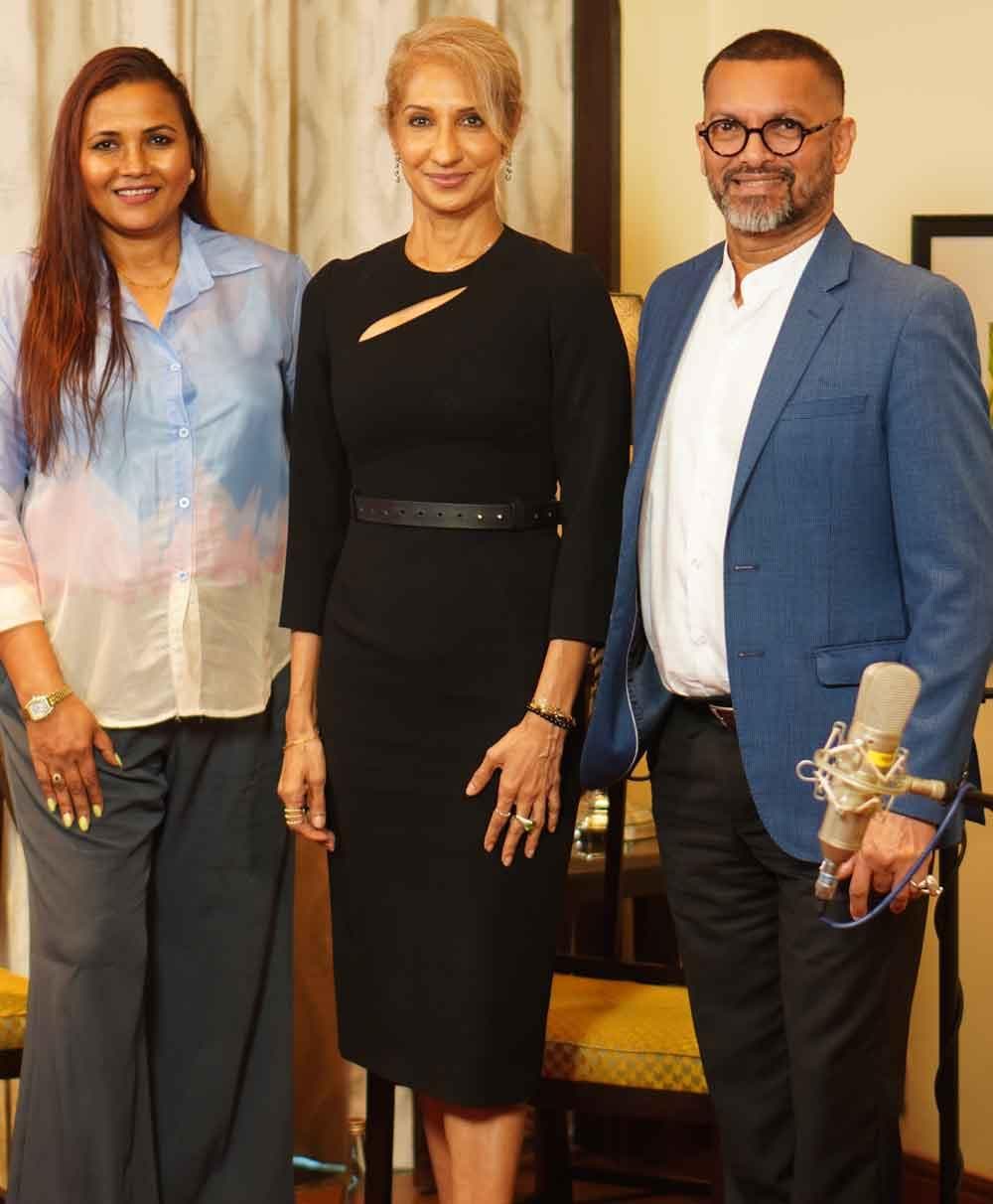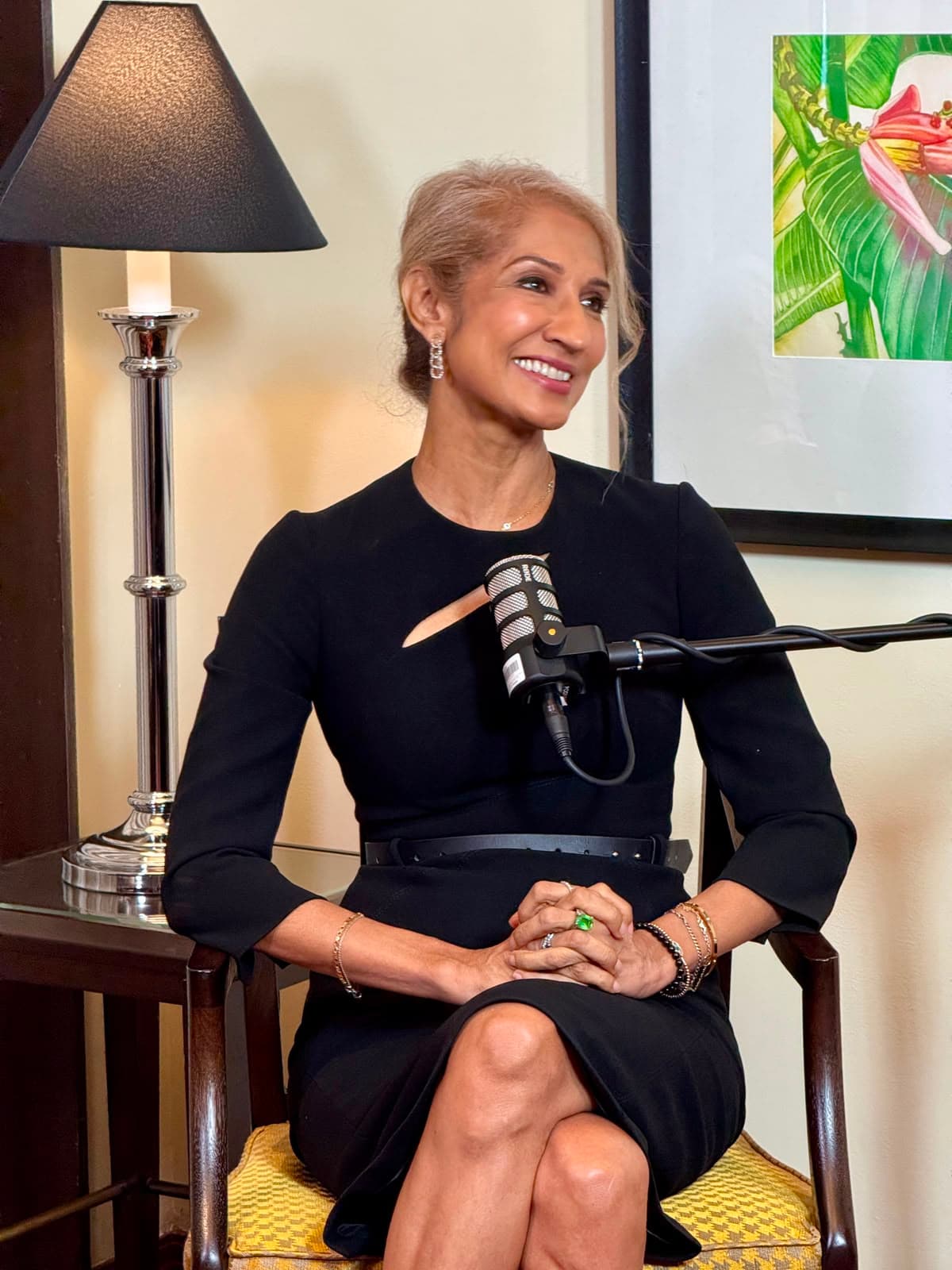



An interview with Otara Gunewardene, Founder and CEO of ODEL
Text by Maheen Senanayake, Pix By Thanuja Amendra
Otara was ahead of me at the Java Café two weeks ago. I waited till she was at the collection counter to make my request. She listened attentively with coffee in hand and as I noted my details on a serviette I debated in my mind how this interview would indeed turnout – if it actually happened.

Two weeks later…
Thanuja and I made a rushed exit from Leo Burnett as we made a concerted effort to meet our subject at 11 am. Stuck at the Bambalapitiya traffic lights on Duplication Road, my mind went back to about a year ago when I had interviewed a beauty queen turned politician. I had interviewed her on no less than three occasions across four days, only to be sadly left with not a line to write. As if by divine intervention, traffic lights turned green on approach at Bauddhaloka Mawatha and at each point thereafter. It seemed higher powers were at play.
Our arrival on location was one minute ahead of time. We were greeted by a loud red Laughing Buddha who shadowed an otherwise even more invisible soul behind the counter. The traces of Feng Shui seemed to silently dominate the lobby on the fourth floor. I had the distinct air of invisible spiritual currents around me. I couldn’t quite place it and it hit at the heart of my balance. This was unexpected.
When Otara greeted me and Thanuja, she maintained composure like no other. I had interviewed many in my life time, and in the eve of my career, I was quite prepared to be surprised. There was something about her that mesmerized me. It wasn’t just the poise, or the elegance, it was more. Our greetings were brief and I began work as Thanuja sat next to me and as a single glance indicated, was making calculations on how to capture one of the most enigmatic individuals I have ever interviewed.
“I am doing this for the Sunday Island’s business section”, I said.
“Oh” was her answer.
“And which Sunday?” she was enquiring
“This Sunday,” I said. “Is it a bad day?” She was pensive.
“By the way, today is Friday the 13th”,” I added whilst she laughed out aloud.
I jumped in direct into business.
Do you enjoy life?
“Yes I do.”
What is your full name?
“It’s Otara Del Gunewardene.”
No hidden parts..?
“No. It’s Otara Del. My second name is Del.”
How did you come up with ODEL?
“Actually my father did, even before I had started the business.”
So did they call you Odel at home.
“No. Otara.”
Where exactly did you study – in terms of school?
“Ladies College.”
Did you enjoy your time at Ladies College? Any great memories at Ladies College?
“I was very prominent in athletics. I was champion for a few years. High jump, hurdles – hurdles being my first choice. I used to swim as well so I used to focus on a lot of sports.”
Did you have the ideal kids’ balance of sports and academics?
`Well,’ she paused but not for long, ‘it was more for sports’, she said.
How did they (parents) take it? I asked hoping the answer will send a message to my son if he ever gets round to reading it.
“They were fine she said. (Inside I was disappointed). And then she added “They were encouraging and always allowed me to do what I loved to do.”
Did they allow you to follow your heart?
“Yes.” The answer had unhesitant conviction.
Was it your mother or your father?
“Both.” Again there was no hesitation.
“Of course there was maybe one exception which was piano lessons which I was forced to do.”
“I guarantee that my son will share your sentiments,” I tell her as she laughs out loud (I believe I just experienced a genuine SMS LOL).
“That was probably the only thing I was forced to do and I hated it,” she added laughing mischievously.
Did you have a plan when you were small?
“I have always had a plan.” (convinced and unhesitant – I wish I had been that organized) And I wonder whether Thanuja had been. I am too scared to look at him) “The plan was to become a vet and to work with animals and to help animals.”
A book immediately came to mind – “All creatures great and small,” a book by James Herriot. I had read it when I was just nine years old lent to me by Dr. Vernon Mendis.
So did you become a vet?
“No I didn’t but I became a biologist.”
Was modeling an accident?
“Yes it was. Then I started the business and the rest is history.”
People say you were a good model. Would you agree?
Again that free spirited laugh. “Well I was one of the more prominent models of the time.”
Did you enjoy it?
“Yes. Totally.”
What captured your heart?
“The glamour, the fun, the excitement. You meet some really nice people. The shows, the entertainment factor. All that is very exciting.”
As a model you don’t really have a choice of what you are going to model. How did that affect you?
“As a model you have to be a in a frame of mind of being the vessel that carries the design. It’s not about you it’s about the design.”
So do you remember the first show?
“Yes, it was one of Nayantara’s shows. I can’t really recollect the hotel where it was held but I have a vivid recall of the show.”
She clears her throat.
So you started the business with selling from you car. How did you cross that boundary from having studied science to sales?
“The trigger was from home, it was my father. He was the one who wanted me to do something in business. To keep myself busy. That is really how and why I started it.”
When did you start your outlet on Dickmans’s road?
“1989.”
That was not a good year?
“It was a good year for me.”
How did you manage to start a business when everything was so dark and everything was closing up. What were you thinking?
“Because I see the positive side of a lot of dark moments. It’s an opportunity. Well as you know all things come to pass and we have gone through so much since,” she says supporting her argument for positivity. “You have to ride through these things and survive.”
Were you scared?
“No. I mean it was something I was trying out and it was small at the time. There is also no benchmark for failure and there certainly are no benchmarks for success. I was doing it the best way I know how and I liked it.”
When did Alexandra place happen.
“That was in 1994.”
What was the litmus test for expansion.
“I mean it was so popular and people liked what was on offer and I found that there was so much more to offer. And we had no space. I wanted better space, better products.”
Who designed the Odel logo?
“It was I think a guy called Imthi..who passed away recently.”
Did you have a hand in it?
“Well, conceptually yes.”
I noticed that all your staff from the beginning have been in uniform. Was that you?
“Well it was all of us and I loved the styling part so it was essentially a collective effort.”
Was there anything in the business that you didn’t know about?
“Yes. Finance mostly.”
Were you scared?
“No, I mean I kept learning along the way to understand all parts of the business.”
You kept innovating. How did that happen? Or are you a fount of innovation?
That laugh again. “It’s not always you! It’s really a collective and progressive effect. Some of it manifests through you – you are just the ..
Vessel? I ask
“Yes,” she responds.
Could I say you are a very spiritual person.
For the first time she checks herself but recovers with great finesse.
‘Yes’ she says.
Odel the store/chain is a reflection of Otara Del. How did you maintain for twenty years or more brand synchrony?
“I think its all about the innovation and creativity and the experience while maintaining the core of the ODEL experience. You keep upgrading and keep up with the trends and style. And we allow people to be part of and share the fashion experience. Our objective is to do everything with a Wow Factor.”
Odel never really had a tag line? I question.
“Well now we have Mind, Body and Soul.”
As the ODEL brand ambassador people have expectations of you, beginning from your looks. Is that a burden?
“Not really. As long as you keep enjoying it.”
Today you are a public company. What prompted that move?
“It was about taking the company to the next level and raising funds for expansion and making the company more structured and formal. And it was the right direction for the company from where we were.”
Any regrets about going public?
“No.”
Can it ever be separate from you?
That laugh again. “I think you have to build a company with that intention. It should never be dependent on that for the future of the company. So, I think it may not be now but it is possible.”
With your kind of following, have you thought of anything other than fashion?
“A few things here and there , but not really. It takes a lot of time and effort to take an offer to the public. So you know we have to focus all our energies there and is quite a challenge.”
How many staff members did you start the business with at Dickman’s Road?
“Two.”
Are they still with you?
“Yes. they are.”
How many do you have now?
“Eight hundred.”
When you recruit staff or new products, do you have a process?
“Yes we do. We evaluate a lot of the factors for that ideal fit.”
What was the most important thing in your life?
“I never think it’s one thing, a lot of things have happened. Along the years many things happen and I consider myself very fortunate to have been able to experience all of these things; besides running a business to having a wonderful family. And I am very fortunate to have a passion for animals as well – that is about the full circle for me.”
Any regrets?
“I don’t believe in regrets. It was not meant to happen if it didn’t happen.”
Could you imagine an Otara without Odel the establishment?
That laugh again… all encompassing and very human.
“Yeah probably living in a jungle and looking after some animal.”
What would you tell aspiring entrepreneurs?
“One thing is their dedication and hard work is what takes you along. And knowing that what you are trying to do has a market and potential and believing in that and knowing that you can make a difference, believing in yourself and never giving up.”
Where does the love of animals come from?
“It was something I was born with.”
What would you like to do really. Is there one thing?
“To help them survive, as a country as a world it is important that you have a balance between animals and the environment. I think animals also deserve the same treatment and people, specially in Sri Lanka, a developing country, does not lose sight of that. We have so much wild life and environment that other countries would virtually die for. We have to be aware of that and really work hard at keeping it and not lose it.”
You started Embark which is almost another Odel?
“Not yet.” Her laugh says it all.
“Well everything we do at Embark is from within Odel. And one of the reasons it is so strong is because it is linked to people’s emotions and because we are able to do so much to help street dogs from the sale of the products.”
The Odel story is very much a story of grit, guts and glory. Otara makes no secret of her journey and Odel is there for anyone to experience its success. Last night, I passed Lipton circus and marveled at the light orchestra of deer grazing the invisible grass and the red lit trees that are such hallmarks of the ODEL Christmas experience. Thanuja and I left the Rajagiriya office elated and transformed from that experience. It may very well be life altering for me and Thanuja. And that laugh … very intoxicating!